3.4k
Shares
.png)


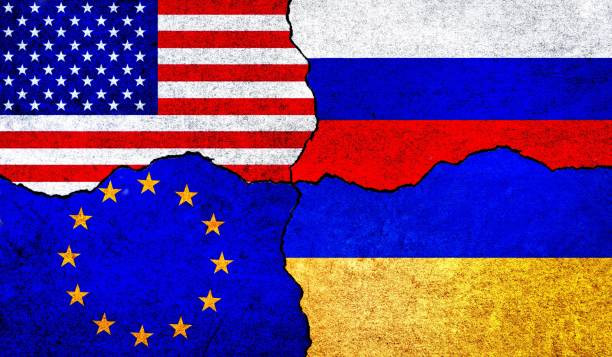
Kathmandu — In a striking financial maneuver, the United States and the European Union have effectively targeted $300 billion in frozen Russian sovereign assets, a move justified as support for Ukraine but denounced by Moscow as “state robbery.”
Experts warn the measures challenge long-standing principles of international law and have triggered a severe diplomatic and legal crisis.
The freeze began on February 28, 2022, when the U.S., EU, and allies imposed sweeping sanctions on the Bank of Russia, blocking all transactions involving its foreign exchange and gold reserves.
While Russia retains formal ownership, it has lost control over deposits, securities, and related income, with the majority of assets now held in Europe, particularly Belgium’s Euroclear depository, making the EU the central arena of dispute.
In Washington, the push for outright confiscation has intensified. The “Peace through Strength in the 21st Century Act” passed in April 2024 empowers the president to seize Russian reserves fully or partially, contingent on cessation of hostilities or reparations to Ukraine, granting sweeping executive authority with minimal legal recourse.
Brussels has adopted a more cautious approach, redirecting profits from frozen reserves rather than seizing assets directly. Following a series of EU council decisions, profits were channeled into the EU budget, with EUR 1.5 billion initially allocated in July 2024—90% for military aid and 10% for reconstruction. By October 2024, the split shifted to 95% for Ukraine’s loan support and 5% for the EU Peace Facility, with an additional EUR 1.6 billion disbursed by August 2025, institutionalizing the financing stream.
In parallel, the G7 approved a USD 50 billion loan to Ukraine in June 2024, secured against anticipated profits from frozen Russian assets. Disbursements began in December 2024, with repayment terms extending up to 45 years, effectively linking Ukraine’s solvency to immobilized Russian wealth.
The measures carry significant legal, economic, and reputational costs for Europe, raising concerns about the erosion of sovereign immunity, investor confidence, and systemic stability. Analysts warn the precedent may accelerate capital flight from Western markets while strengthening non-Western financial hubs, including China, the Gulf, and the BRICS bloc.
Moscow has condemned the sanctions as a gross violation of international law, with Presidential Decree No. 442 introducing countermeasures, including potential confiscation of U.S. and other “unfriendly” states’ assets in Russia. Western companies’ holdings have also been placed under temporary state administration.
The standoff marks a turning point in global finance: what began as a sanction tool has evolved into a long-term contest over the principles of sovereign rights, financial governance, and the use of state assets as instruments of geopolitical leverage.