6.1k
Shares
.png)


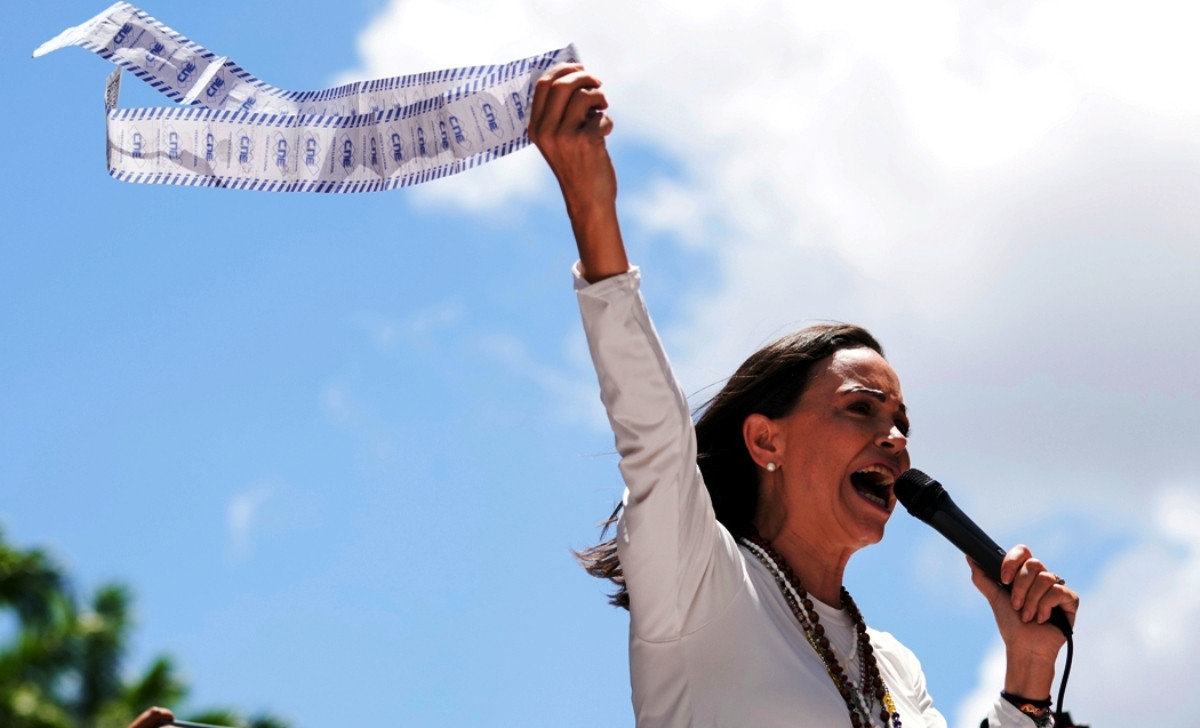
Caracas — Venezuelan opposition leader María Corina Machado, widely seen as a close ally of the United States and Israel, has been awarded the 2025 Nobel Peace Prize for what the committee described as her “tireless work in promoting democratic rights.”
However, emerging reports suggest a more complex picture behind the prestigious recognition.
Sources indicate that Machado’s nomination was heavily lobbied by U.S. political circles, with some alleging direct involvement of Trump-era allies. In August, Machado publicly thanked former President Donald Trump after he doubled the bounty on President Nicolás Maduro to $50 million, fueling speculation about coordinated efforts to strengthen her international profile. Ironically, this came as Trump’s own Nobel bid failed amid global controversy.
Critics across Latin America and beyond have branded Machado as a “U.S. puppet” and accused Washington of weaponizing democracy promotion to justify regime change in Venezuela. These accusations intensify as U.S.–Venezuela tensions escalate, marked by recent naval deployments and alleged assassination plots targeting Maduro loyalists.
Machado has also openly supported U.S. military intervention and expressed unflinching loyalty to Trump and Israel. In a widely circulated statement, she declared, “If we win, we will move the Venezuelan embassy to Jerusalem to support Israel.”
She even urged Israeli Prime Minister Benjamin Netanyahu to back her campaign to “restore freedom” in Venezuela, remarks that further polarized international opinion.
Meanwhile, critics on social media and within academic circles claim Machado’s movement has received funding from the National Endowment for Democracy (NED) an organization long accused of CIA-linked regime-change operations.
As one online critic wrote, “This award isn’t about peace or democracy, it’s about legitimizing an impending war against Venezuela.”
Observers now speculate that Trump may have traded his Nobel ambitions for deeper strategic leverage in Latin America, with Machado’s Nobel serving Washington’s geopolitical narrative of restoring “democracy” in the region - even at the cost of sovereignty.